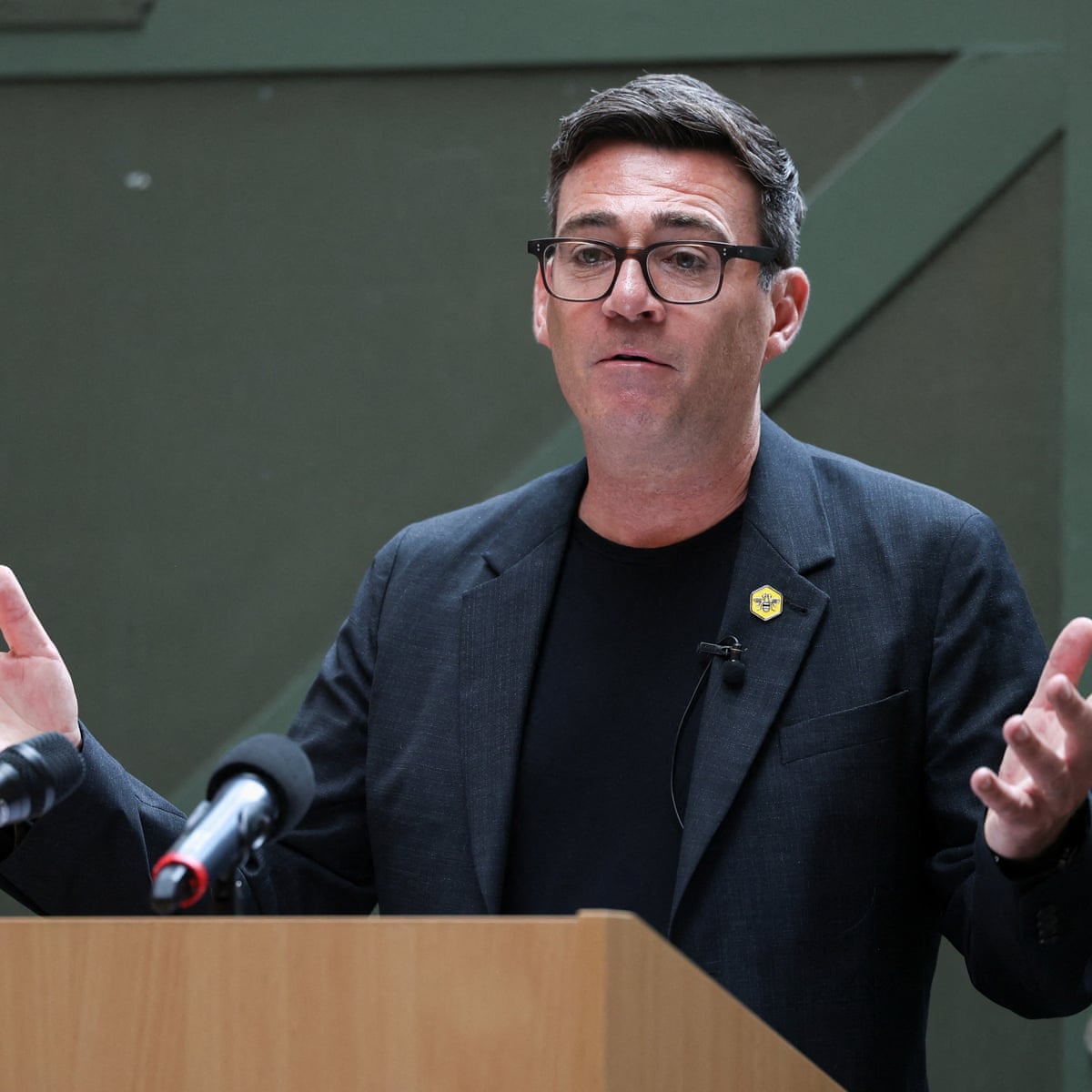
Read More Today’s speech by Andy Burnham underlines that he represents a shift in vibes. What matters, however, is substance, and on that front we still have more questions than answers.Our soon-to-be prime minister made plenty of good noises. His speech was at the People’s History Museum in Manchester, which showcases the struggles of ordinary people – such as the Levellers, Chartists, suffragettes and trade unionists – for justice and democracy. He would “take inspiration from that history”, he told his enthused audience.Much of what he said was an implicit indictment of the current Labour government. “We can’t go on like this,” he said, condemning two decades of falling living standards since the 2008 financialcrash. His premiership would be a “circuit breaker”. The whips’ system would no longer “create fear or close down debate”: a pointed rejection of Keir Starmer’s authoritarianism, which has repeatedly seen Labour MPs suspended for defying orders on votes.Burnham noted that Britain is one of the most overcentralised countries on Earth, and promised the “biggest rebalancing of power our country has seen”. Exciting-sounding stuff, but remember that George Osborne launched what he called “the biggest transfer of power to our local government in living memory” more than a decade ago. The critique then was that, in an age of austerity, this amounted to devolving cuts and weakening redistribution, while favouring richer communities with stronger tax bases.This time, Burnham is pledging to hand mayors control over Whitehall budgets covering housing, social security and education. But these budgets are already being squeezed relative to need. Rising school costs, for example, have cancelled out increases in mainstream per-pupil funding. Ever louder siren voices demand cuts to the welfare state, even though welfare spending as a proportion of GDP has remained broadly static. Most of that spending goes on pensioners, while tens of billions are spent coping with the consequences of the housing crisis and a low-pay economy.The biggest applause understandably went to his commitment to the biggest council housebuilding programme since the postwar period. Back in 1945, the Labour health minister, Nye Bevan, announced such a programme. He would later describe his desire to build “the living tapestry of a mixed community”, hailing “the lovely feature of English and Welsh villages, where the doctor, the grocer, the butcher and farm labourer all lived in the same street”. Council housing was built to a better standard than private housing. The Tories competed with Labour over the number of units built, though alas, that often meant quality suffered.Today, more than1.3 million people languish on social housing waiting lists in England. With home ownership an unaffordable dream for many, growing numbers have been driven into a private rented sector defined by rip-off rents. But with Burnham committing to sticking to the arbi