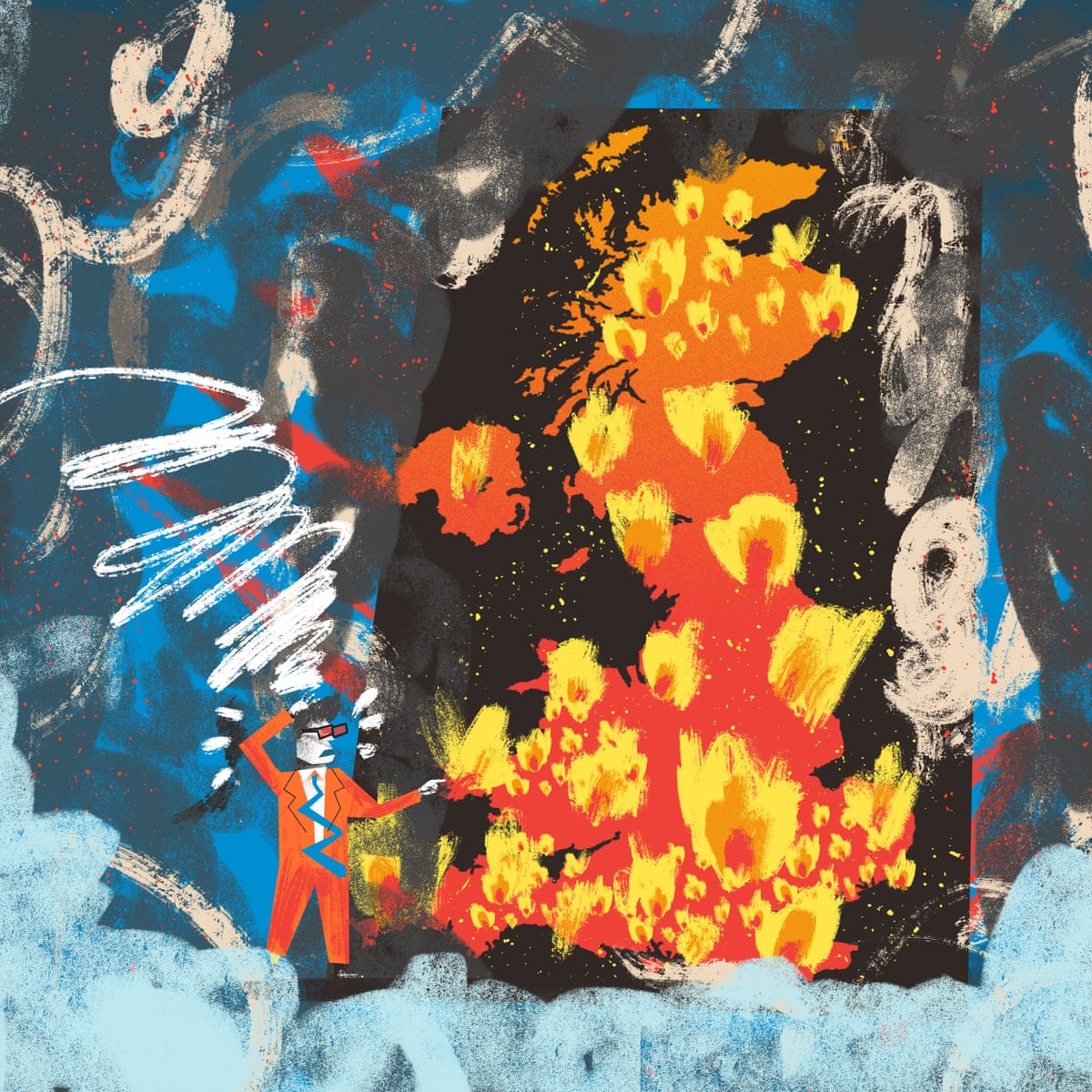
opinionIn this fragmented but supposedly mild country, watching and talking about the weather forecast is meant to be a reassuring, unifying activity. Collectively, we have created and maintained a national climate narrative of small disappointments and pleasures.The first weather forecaster to appear on British TV, George Cowling, made his debut on the BBC in January 1954, predicting that “tomorrow would be rather windy”, but “a good day to hang out the washing”. For most of the 72 years since, such brief, carefully calibrated broadcasts have provided people from Aberdeen to Penzance with practical information, small talk and minor grumbles about essentially the same situation: living in a country where the weather is constantly changing, in a paradoxically unchanging way.Yet like the traditional British climate, that common weather culture may now be evaporating. “Met Office considers issuing red ‘extreme heat warning’ across Britain while nation enjoys ‘incredible summer’,” said the headline above the forecast on the GB News website on Monday, caught between terror and delight at the latest heatwave. As the climate crisis has affected this country in more and more unmistakable but uneven ways, TV weather forecasters have increasingly struggled to find the right language to describe this transformation’s daily consequences. Their struggle influences and exemplifies that of many Britons to understand, and work out what we think about, the apparent end of the weather patterns we expected to shape our whole lives.Across all the British TV broadcasters, sometimes within the same bulletin, or even the same sentence, weather forecasters now present sunshine as welcome and oppressive; high temperatures as miraculous and unbearable; rain as an inconvenience and desperately needed; cloud cover as depressing and a relief. Tanned forecasters in sundresses, emphasising the positives for domestic holidaymakers of another record-breaking summer, alternate with grim-faced forecasters suggesting we are experiencing a weather apocalypse.Meanwhile, the wildly differing effects of the climate crisis on different areas, and from one season to another, are further fracturing Britain’s weather conversation into a babble of separate, sometimes conflicting discourses. This year, parts of the country have experienced such contrasting summers – wetter than usual in western Scotland, desert-like in southern England – that we can no longer say they share broadly the same northern European climate, as had been assumed for centuries. In an era of separatism and nationalism, another major binding element of the UK may be falling away.Beneath the relatively placid surface of our previous weather culture, there were always some tensions and contradictions. In a 2025 academic paper, British Heatwave Discourse (1985–2023): from Ice Cream to Armageddon?, Thijs van Dooremalen and Philip Smith analysed articles about heatwaves in the national press. They foun