




 Ροή Ειδήσεων
Lambros Christofi, Chairman of Hadassah: We are building a long-term Hadassah presence in Cyprus
For someone living with pain, difficulty moving or the anxiety of a serious diagnosis, access to the right care can make a difference to everyday life. That need lies at the heart…
7 Οκτωβρίου 2026 · 09:31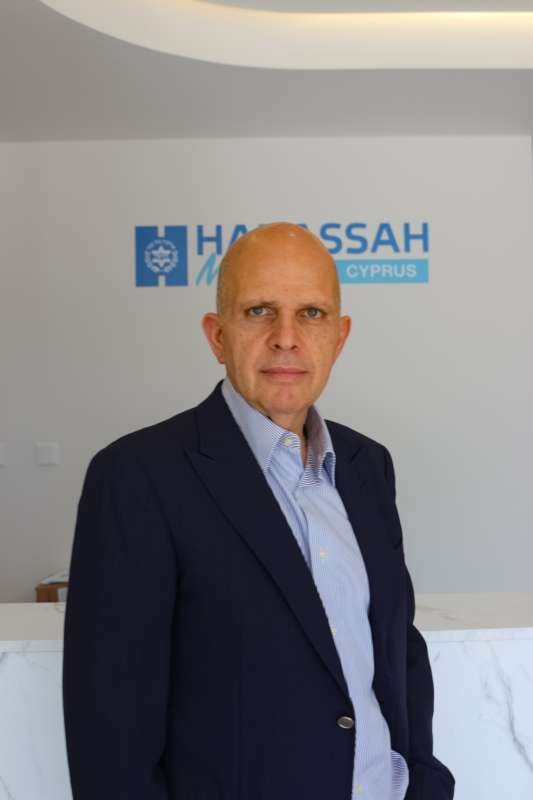
For someone living with pain, difficulty moving or the anxiety of a serious diagnosis, access to the right care can make a difference to everyday life. That need lies at the heart of the work of Hadassah Medical Center Limassol.
The centre’s operation marks the first completed phase of a partnership that began in 2019. For Lambros Christofi, the significance of the investment lies both in its facilities and in the people who can benefit from them. He discusses the journey to opening, the team’s capabilities and the aim of giving more options to patients and families seeking help.

What is the vision behind the centre?
I believe there is a substantial need for more coordinated care and easier access to additional expertise. Some people live for years with orthopaedic or neurological conditions, pain and limitations in their daily lives. Others are facing cancer and need greater clarity about their options.
A serious diagnosis changes life for an entire family. People wonder whether there is another option, who can help them and how to organise the next step. We want to help them find clear answers and appropriate guidance. I believe it is worth devoting time, knowledge and resources to exploring what more can be done for them.
For me, this investment is a long-term personal commitment. I want us to create a place where patients feel that someone is giving them proper attention, organising their care and helping them understand the next steps.
We cannot solve every problem. But we can work consistently to broaden patients’ options, drawing on the experience of Hadassah in Jerusalem.
What was the journey from the first discussions to the centre’s opening?
Discussions with Hadassah began in 2019, and the first agreement was signed in 2020. In 2021, we secured an investor’s participation in the Nicosia projects, and in December 2022 we submitted the first planning application for the major project.
Delays in the approval process led us to move forward in Limassol in parallel, so that the partnership could begin providing services. The premises were selected in 2022–2023, in collaboration with Hadassah. Complex procedures and difficulties with permits followed here too, extending the implementation period.
The seven years therefore refer to our overall relationship with Hadassah, rather than solely to the preparation of the Limassol centre.
The hardest part was keeping a goal alive when delays often seemed to push it further away. We continued because we believed this partnership could offer meaningful help to people who need it. Today, we have an operating facility, and our responsibility is to earn, every day, the trust of the people who turn to us.
Why was Limassol chosen?
The decision was made together with Hadassah. Limassol has a dynamic local community, a large international population and significant visitor numbers.
The location in Agios Tychonas, on the coastal road and close to the hotels, provides access to the eastern side of the city and convenient connections to other districts.
We are already receiving interest from across Cyprus. We want the centre to be an accessible point of reference for people who need our services, wherever they live.
What is the range of your services and equipment?
We bring together doctors, physiotherapists, nurses, diagnostic services, rehabilitation and preventive care in one place. This collaboration helps us connect an assessment with a specific care plan for the patient.
We have invested in MRI, CT, X-ray and ultrasound, as well as complementary technologies such as the Gait Lab for analysing walking and movement.
Our Cardio Suite has a particularly important role: a large, purpose-designed space dedicated exclusively to cardiac and cardiopulmonary assessment. It includes LODE cardiopulmonary assessment and rehabilitation systems and ergospirometry, linking investigations with the evaluation of functional capacity and, where appropriate, supervised exercise programmes.
Our equipment also includes a cryotherapy chamber, HaloCab with five different therapeutic options, Zimmer and INDIBA systems, and other physiotherapy technologies. Our Medical Gym and anti-gravity treadmill play an important role, with the treadmill allowing exercise under reduced body-weight loading.
We have also placed emphasis on Neurological Rehabilitation, with equipment, assistive devices and exercises that support efforts to improve movement, balance and functional ability, according to each patient’s needs.
For someone who struggles to walk or carry out simple daily activities, progress has a deeply personal meaning. That is why the value of our equipment lies in its appropriate use, under the supervision of our doctors, physiotherapists and nurses.
What does this approach mean for the centre’s staffing?
Although we are a medical centre without operating theatres or inpatient rooms, we have invested in a particularly extensive team of nurses, physiotherapists, other therapists and healthcare professionals.
That decision reflects the nature of our services. Rehabilitation, supervised exercise and support for people with complex needs require time and personal care. Patients need professionals who will guide them, monitor their progress and adapt their programme when necessary. Trust is built by people: by whether they listen to you, explain things clearly and follow your progress with real interest.
We have attracted experienced staff from other organisations. Our CEO, George Zachariades, has considerable experience in hospital management, while our team understands the demands of day-to-day patient care.
Our efforts are focused on applying Hadassah’s quality standards, protocols and procedures, in close collaboration with the teams in Jerusalem.
How is the partnership with Hadassah in Jerusalem used in practice?
Through communication with the appropriate medical teams, access to specialist opinions and, where necessary, coordination of treatment in Israel.
During September, we managed more than six particularly serious cases that required rapid mobilisation. In one of them, according to the information we received about the medical assessment in Cyprus, the patient’s prognosis was extremely poor and they were not expected to survive.
Within a few hours, we organised an air ambulance transfer to Hadassah, where a specialist team took over their care. According to the updates we receive, the patient is progressing very well, and we are looking forward to their return to Cyprus.
On a personal level, I can describe such a significant reversal of the prognosis as a medical miracle. At the same time, I recognise the doctors’ work, expertise and coordination behind that development.
Every case is different, and no comparable outcome can be promised. For this patient’s family, however, access to an additional opportunity for care was invaluable.
What does this partnership add to the medical care available in Cyprus?
Cyprus has excellent doctors, with whom we seek to collaborate. The connection with Hadassah broadens the resources available to them and their patients.
An organisation with more than a century of history has accumulated experience from a large number of complex cases, alongside specialist teams and substantial research activity.
In difficult cases, that additional experience can help in evaluating different approaches. We want patients to have the opportunity to explore those options with clear information and support.
How is a second medical opinion organised?
The process begins with an initial medical assessment at the centre. The patient’s medical history, available tests and previous treatments are reviewed, and their medical records are organised.
The records are sent to the appropriate specialist or team at Hadassah. If additional information is required, we help the patient gather it.
The opinion sets out the assessment and recommended options. Care may continue in Cyprus, or treatment in Israel may be arranged, depending on the case and in consultation with the treating doctors.
We emphasise clear information at every stage. Patients and their families already have enough anxiety; the process should provide guidance and support.
How has the public responded so far?
The response has exceeded our expectations. More than 700 patients have expressed serious interest in a second opinion and access to Hadassah’s specialist care. These are recorded enquiries.
The large volume of enquiries caused delays in our responses. I want to apologise to those who waited for a reply to a phone call, message or email. We understand that waiting carries a different weight for someone worried about their health.
We have taken steps to clear the backlog, with the aim of contacting everyone who has already submitted an enquiry within the next ten days.
The public’s trust encourages us and gives us a responsibility to improve our organisation and service.
Which services can be accessed through GeSY?
Services are already available through participating doctors and partners registered with GeSY, including laboratory services and physiotherapy, in accordance with the system’s procedures.
We are also awaiting swift progress on the inclusion of our diagnostic imaging department, so that access for beneficiaries can be expanded.
Specialist second opinions from professors and heads of department at Hadassah in Jerusalem are provided privately. Patients are informed about the process and the cost before proceeding.
How does your presence today connect with Hadassah’s longstanding relationship with Cyprus?
That relationship has deep roots. For more than six decades, tens of thousands of Cypriots have turned to Hadassah for care. Its doctors have visited Cyprus, while Cypriots have studied at the Hebrew University of Jerusalem and affiliated academic institutions.
One of the first was Dr Lakis Anastasiades, who went to Israel to study as early as the 1960s. At the medical seminar on 15 October, we will honour his career and contribution.
The seminar offers an opportunity for scientific exchange and to strengthen these relationships. I want to thank everyone participating, contributing to its organisation and supporting the collaboration between Cyprus and Hadassah.
What are the next steps for growth?
We are exploring opportunities for a clinic in Limassol and a medium-sized hospital facility in Nicosia. At the same time, we are awaiting the permits for the major Nicosia project and evaluating partnerships and acquisitions in related fields.
We will present each step when it is sufficiently developed. I believe we now have the conditions in place to move forward at a faster pace, with an operating base, an experienced team and significant public interest.
For years, we worked to open this door. Today, our responsibility is to the person who walks through it. That is how our success will be judged: whether we helped them understand their options, improve their daily life or gain access to the care they needed.
Πηγή – Cyprus Times
ΔΙΑΦΗΜΙΣΗ
Σχετικά άρθρα
Ροή Ειδήσεων Ροή Ειδήσεων
ΔΑΟΕ: Νέα επιχειρησιακή δύναμη της Αστυνομίας απέναντι στο οργανωμένο έγκλημα
ΠΡΙΝ ΑΠΟ 1 ΛΕΠΤΑ Πολιτισμός
«Μόνη έγραψε την απάντηση η Βίσση» λέει ο δικηγόρος της-Τι θα κάνει αν ο Καρβέλας της απαγορεύσει τραγούδια του (video)
ΠΡΙΝ ΑΠΟ 1 ΛΕΠΤΑ Οικονομία