






 Διεθνή
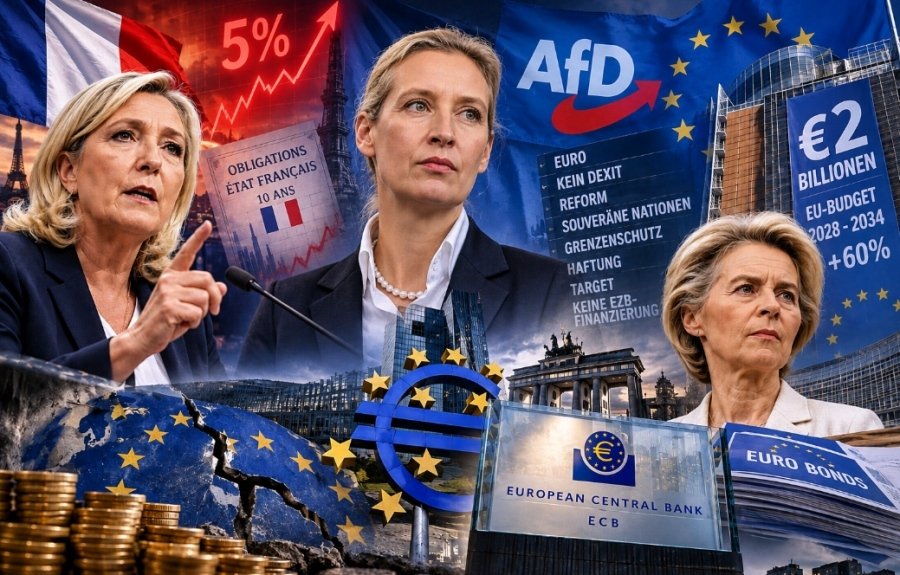
Using a… Giorgia Meloni model, Marine Le Pen and AfD, the patriotic parties in Europe intend to avert a new debt crisis plotted by dark circles of the establishment, to restore the economic sovereignty of Eurozone member states, and to return to a virtuous fiscal cycle.
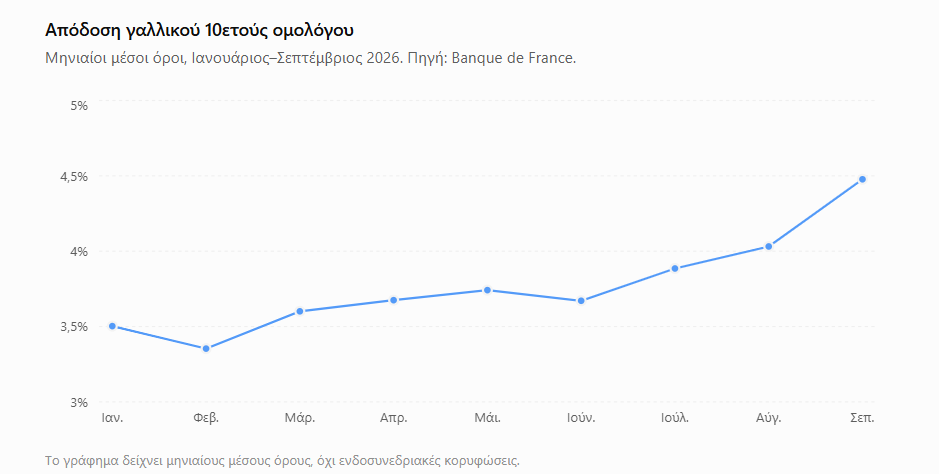
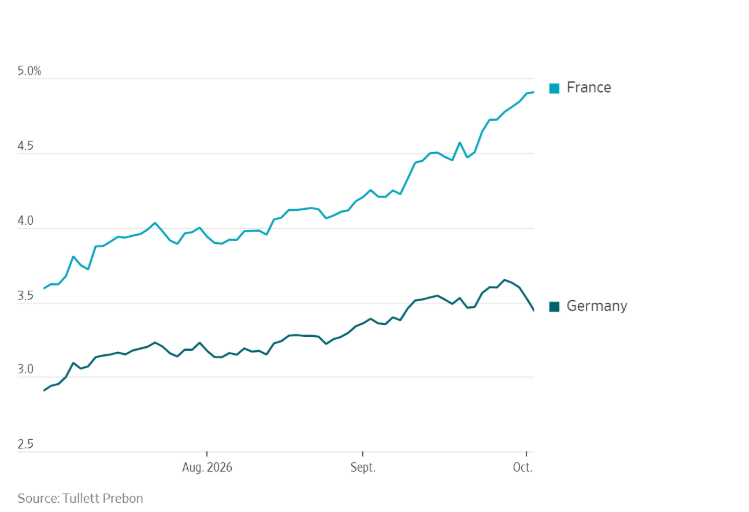
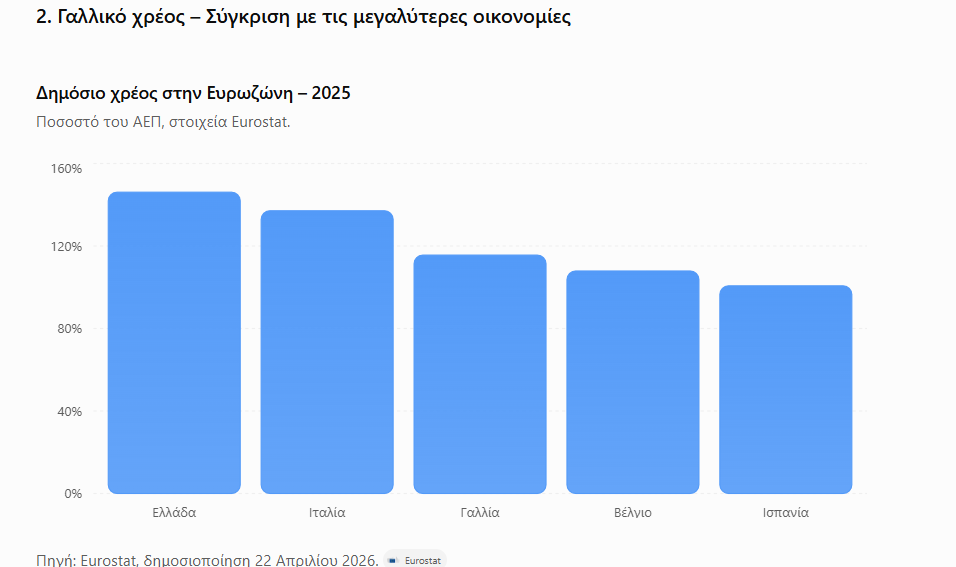
Following the surge in ten-year French sovereign bond yields near the psychological threshold of 5 percent during final trading on Friday October 16, the situation in bond markets began to de-escalate early in the week.
Two political developments of particular importance, one in Germany and the other in France, appear to have functioned as crisis containment mechanisms, the so-called «circuit breakers» of financial markets.
The first concerns the significant policy shift by the German Alternative for Germany (AfD) toward the European Union and the euro, while the second is linked to the fiscal consolidation plan presented by Marine Le Pen, leader of the French National Rally.
The common denominator of both interventions is the effort to rein in fiscal expansion by Brussels, strengthen state responsibility for national debt, and move away from the policy of perpetually financing deficits.
Germany: AfD abandons Dexit and changes strategy on the euro
On Monday (October 12), an internal strategy document of AfD was circulated, revealing a substantive change of direction in the party’s European and monetary policy.
According to the document, those responsible for European policy within AfD appear to have agreed on a new approach, abandoning previous positions favoring the exit of Germany from the Eurozone or even from the European Union, the well-known Dexit.
Instead, they propose transforming the EU into a union of sovereign nation-states, with fundamental pillars consisting of the single market, effective protection of external borders, and coordination among member states on security matters.
The central objective is returning political competencies to nation-states in order to curb the unchecked expansion of powers wielded by European institutions.
This constitutes a strategy attempting to restrain the centralism of Brussels without causing the destabilization that an outright rupture with the existing European structure would entail.
Targeting the ECB: An end to state financing via money printing
Of particular interest are the proposals of AfD on monetary policy.
The authors of the text argue that the euro must rest upon a robust institutional framework, in which every state assumes full responsibility for its fiscal choices and obligations.
The critical question is whether such a model could bring an end to shifting fiscal burdens onto German taxpayers.
Even more radical is the proposal for a drastic curtailment of the scope of action of the European Central Bank.
Specifically, AfD demands an end to indirect government financing by the ECB, the settlement of balances within the TARGET system (for liquidity), and the creation of an institutional framework for member-state insolvency.
Banning the financing of public debt through central bank money creation would represent a true revolution in Eurozone monetary policy.
In practice, it would drastically restrict the capacity of governments to support policy choices through artificially low borrowing costs.
Within this context, policies such as the Green Deal would confront severe financing hurdles, since, according to voiced criticism, a large portion of economic activities promoted in its name is sustained thanks to distorted financing terms.
Recent turmoil across sovereign bond markets reinforces the arguments of those calling for a change of course.
Despite the radical nature of certain proposals, the new plan of AfD avoids a frontal collision with existing European structures.
And this carries particular importance for markets.
After all, nothing provokes greater anxiety among investors than uncertainty.
The presence of a clear political and economic horizon forms a vital precondition for restoring confidence.
From this perspective, developments in Germany may have contributed to easing pressures in the bond market.
France: Marine Le Pen presents fiscal consolidation plan
A similarly reassuring message to markets was delivered by Marine Le Pen, the leading figure of National Rally, the patriotic party leading across all opinion polls.
On Tuesday (October 13), she presented the broad outlines of a plan to restore fiscal stability in France, at a time when the country’s public finances are under intense pressure.
At the center lies a partial return to the Maastricht criteria, with the goal of containing the annual budget deficit below 3 percent of GDP.
However, achieving this goal presupposes a recovery in economic activity.
The French economy, like the German economy, displays pronounced signs of stagnation, with limited innovation and growth dynamics, while critics of European policy attribute a significant share of problems to strict climate mandates from Brussels.
Marine Le Pen warned that France is moving toward a sovereign solvency crisis, arguing that immediate fiscal adjustment is required.
Her plan envisions savings of 140 billion euros by 2032, through significant cuts to public spending.
This constitutes an ambitious attempt to rein in fiscal derailment, which, if implemented, could fundamentally alter the trajectory of French public debt.
Primary surplus in 15 months and a constitutional debt brake
Marine Le Pen sets an exceptionally ambitious target: achieving a balanced primary budget within just 15 months of taking office.
This means public revenues will cover primary expenditures, without factoring in debt servicing interest.
At the same time, she proposes the constitutional enshrinement of a mechanism limiting public borrowing, which she terms a «golden rule».
The relevant provision could be incorporated into the French Constitution via referendum.
The model evokes the German debt brake, although recent experience in Germany raises reasonable questions regarding the actual resilience of such fiscal commitments.
Chancellor Friedrich Merz moved to significantly loosen the German fiscal framework, utilizing the outgoing Bundestag and special financing funds.
This development highlighted how easily even constitutionally enshrined fiscal restrictions can be revised when political priorities shift.

Message from Le Pen to Ursula von der Leyen: 64 percent cut in French contributions to the EU
Particular importance also attaches to the proposal by Marine Le Pen for a drastic reduction in France’s financial contribution to the European budget.
She demands the immediate return of net French contributions to the levels of the early 2000s.
Specifically, she proposes capping them at 5 billion euros, which corresponds to a reduction of approximately 64 percent.
The proposal constitutes a direct political challenge to the President of the European Commission, Ursula von der Leyen, and the strategy of continually expanding the community budget.
In the event of an election victory, Marine Le Pen could emerge as the central figure of a European fiscal consolidation movement, aiming to curb the economic and political power of Brussels.
Mammoth 2 trillion euro budget from Ursula von der Leyen
The clash acquires even greater significance in light of plans by the European Commission for the next multiannual budget of the EU.
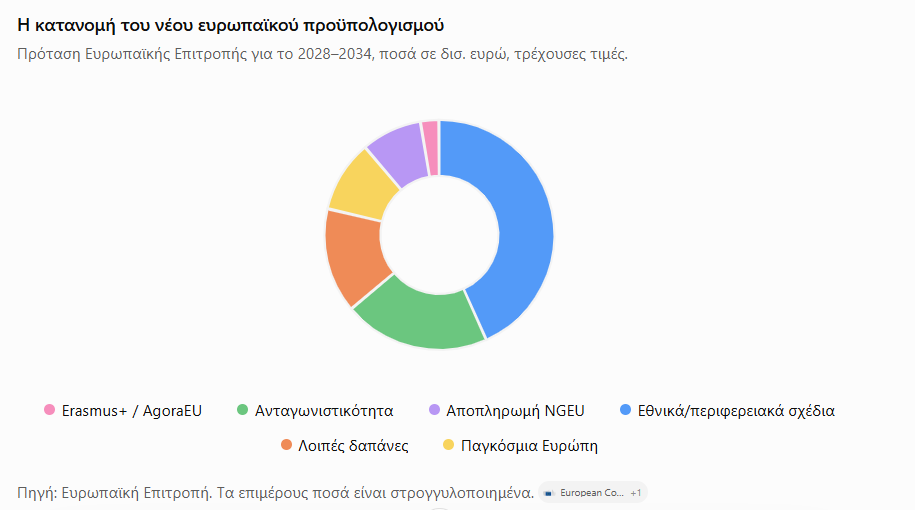
Ursula von der Leyen is pushing for a 2 trillion euro budget for the 2028–2034 period.
This constitutes an enormous fiscal expansion, on the order of 60 percent, which would entail a substantial increase in financial obligations for member states.
Specifically for Germany, the annual contribution is estimated to rise from roughly 27 billion euros today to between 40 and 45 billion euros.
Even Friedrich Merz, despite the greater tolerance he has displayed toward government borrowing, is attempting to rein in some of the most ambitious fiscal aspirations of the European Commission.
Of course, the question remains whether this constitutes genuine political resistance or communications management of public blowback.
In any event, the German Chancellor appears to realize that the policy of constantly expanding European spending faces mounting resistance.
Eurobonds: The major risk of debt mutualization
The determining issue for the future of the Eurozone is whether Europe will move toward ever greater mutualization of public debt.
Such a model could rest on the issuance of common European bonds, the well-known Eurobonds, with fiscal obligations gradually concentrated under the supervision of the European Commission.
If this process were further accompanied by systematic monetary support from the ECB, a system would emerge in which fiscal decisions become decoupled to a significant degree from the direct responsibility of national governments.
Critics of this approach warn that this effectively amounts to shifting the cost of borrowing onto European taxpayers.
Under such an arrangement, citizens would be called upon to shoulder ever larger burdens to finance a centralized system of economic management, state interventionism, and central planning.
The outcome, according to this perspective, would be a mechanism perpetually demanding more billions of euros without a corresponding improvement in productivity or competitiveness.
Do investors see a way out in the European patriotic Right?
Latest developments lead to the assessment that sovereign bond markets may have received reassuring signals from political forces of the European Right.
The shift of AfD toward a more institutional approach to the European Union and the commitment of Marine Le Pen to fiscal discipline could reduce fears of abrupt political ruptures.
Simultaneously, an alternative strategy for Europe emerges, prioritizing fiscal responsibility, national sovereignty, and the containment of competencies held by central European institutions.
If these political forces manage to halt the path of perpetual increases in deficits and joint borrowing, conditions could be created for a more restrained yet fiscally more stable European Union.
The new strategy document of AfD offers indications of how such a direction could take shape.
The big question, however, remains: Will Europe choose fiscal consolidation and returning responsibility to nation-states, or will it persist along the path toward debt mutualization, with taxpayers ultimately footing the bill?
For bond markets, the answer could prove decisive for the next crisis in the Eurozone.
www.bankingnews.gr